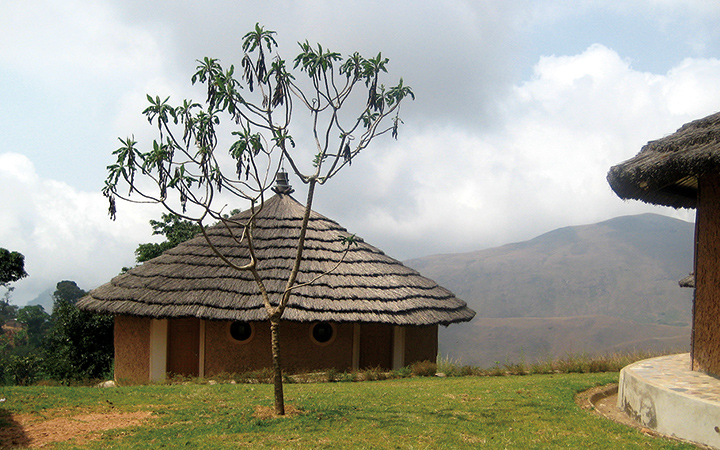
We owe it to ourselves to preserve what’s left of our culture for posterity as I sit here I look back to just 20 years ago and I’m alarmed at the speed with which my language and heritage are being battered almost to extinction and I’m inclined to take action as my dear father Mr. Jeremiah A. Ogar (Bette Pre-Colonial history 1800 - present. 1978) who so rightly foresaw this predicament prompting the documentation and chronicling of the Bette history and culture along with Mr. Jeremiah Adie and in recent times quite a few gentlemen of the Bette-Bendi extraction including Dr. Joseph A Ushie, Dr. Udida Undiandeye to mention a few.
First of all let me delve into a brief history of the Bette/ Bendi people of Cross River State Nigeria for the purpose of this write up I will classify the Bette/Bendi people and others in this area broadly as “Obudu people”
Nestled in the plains of the beautiful vistas of the savanna and shielded by the beautiful undulating mountains of Ulanga-Utanga in the east and the U’kwelugbudu to the west Ukpanya and the hills of Obang. Obudu is blessed with green vegetation and lucky to be located close to and shielded by the Okwangwo forest a pristine rainforest that stretches into the republic of Cameroun an advantage that has aided in making Cross River State an Eco tourism destination of the world comparable to the Amazon and other such destinations. Before I digress, let me note that the Obudu people are a very peace loving lot with minds as tranquil and beautiful as their landscape but historically the people of Obudu were great warriors who never lost any wars for many generations a testimony our Tiv neighbors are quick to testify to but that is a story for an-other time.
In modern times the Obudu people have turned out to be one of the biggest source of the great intellect and manpower that permeates the entire Cross River State civil service and the academic institutions around the world a feat that is almost impossible to believe considering that Obudu local government of Cross River State is the smallest in terms of land mass and population (one million people) the warrior spirit and a de-termination to succeed in all endeavors has put the Obudu people on a pedestal of success beyond all odds. Why am I going on about the greatness of the Obudu people? I guess because it will help put in proper perspective the plight of the Bette diaspora
Bette/Bendi: The language of our ancestors
It is important to note that Cross River State is one of the smallest states in Nigeria but interestingly has one of the largest stretches or proliferation of languages and dialects. To give you an idea, in an area of 300 kilometers there are over twenty languages spoken most of them not even closely related. However Obudu, Obanliku, Bekwara and Boki local governments are very closely related, linguistically they are dialects of what could be referred to as semi Bantu group of languages
What is interesting is that in the 21st century globalization the Bette language like many dying languages are being impacted by the proliferation of social media and the predominance of the use of the English language which has become the Latin of the modern age.
To my utter shock and dismay in the last couple of years I found that kids and young adults in my native Obudu now communicate with each other mostly in English language, Pidgin English and probably Hausa or any other major Nigerian language.
As much as this is an advantage the down side, I think is that unbeknownst to them they relegate the Bette language to the background and sincerely as it turns out most youngsters 20 years and younger can no longer speak a complete sentence in Bette and when I had the pleasure of visiting my hometown I found to my dismay that youngsters now find it trendy to address elders in English or some derogatory fashion such as “what’s up Gee!” Or “how u dey?” Or “bros what’s up?” Or even worse “what’s up nigga?” Again the influence of western or Hollywood movies has a partial blame for this but most of all in a country like Nigeria where the Hausas, Yorubas and Ibo’s are the largest ethnic groups not to mention other tribes such as the Ishekiris, Igala, Tivs, Effik & Ibibio to mention just a few. Effectively putting the Bette language amongst the minority of minority ethnic groups.

At another level lets for a moment look at how the above factors stack up against the Bette diaspora on a much larger scale by examining the factor of ‘Godfatherism’ in the Nigerian political scenario which to a large extent places the Obudu people in a difficult position where to get a federal job is not only difficult but almost impossible as very often because of their minority status it’s not easy to have a ‘God father’ to lunch them into a great career with the federal civil service or the private sector of the Economy in spite of the wealth of experience and educational qualification. It’s no news that in Ni-geria jobs or opportunities aren’t often acquired through merit. So faced with chronic unemployment the Bette young graduates like their counterparts from other parts of the country have to seek greener pastures elsewhere in the Europe, America, Asia and pretty much anywhere else where they could eke out a living in what is now referred to as brain drain. In my opinion this is Also where the dilemma of the Bette diaspora my-self included, who after many years of sojourn abroad and in most cases involved in interracial marriages, are faced with the difficult choice of having to speak English or some foreign languages to kids as the primary means of communication which in itself is not a bad thing, but because like in this unique circumstance where I’m the only Bet-te speaking individual in all of Japan, Although not an excuse, presents a big chal-lenge to teaching the kids Bette language because of busy work schedules (often all day) barely enough time to catch up with the children or when possible just for two hours before bedtime. Let’s face it when can these kids learn to speak Bette and Eng-lish and Japanese when there’s barely three hours in a day to effectively spend time with them?
Despite attempts to travel home to Obudu every other year to have them interact with and familiarize themselves with their African roots it’s not enough simply because the vacations typically last for only two weeks and for the most part very stressful from the jet lags to the sleepless nights one spends catching up with friends and family and so on.
In the next edition of The-Flotilla I will be continuing the 2nd segment of this story and attempt to look at ways to rescue the Bette language and culture from apparent death feel free to send your contribution or comments to comments@the-flotilla.com