Afrobeat is a music genre that combines the traditional Yoruba music, Jazz, Highlife, Funk and chanted vocals fused with percussion. This music variety was popularized by the legendary multi-instrumentalist and band leader Fela Anikolapo Kuti in the 1970’s, who is also credited with naming his style of music as “Afrobeat” after returning from a tour of US with his band then named Kola Lobitos. The band was renamed Nigeria 70, Africa 70, Egypt 80, respectively as his career and popularity grew
Apart from revolutionizing music style with his Afrobeat music, Fela Kuti took this music to the world and turned it into the most recognized genre in the world and throughout his career he rolled out hit after hit with such signature songs as “Lady”, “Zombie”, “ITT(international thief thief)”, “Teacher don’t teach me nonsense”, to mention but a few.
Afrobeat music can be described as songs of resistance to put it quite simply but beyond that it’s a form of music that fuses a complex mix of influences of jazz, funk, highlife (a popular form of West African urban music started in Ghana in the early pre-independence days) layered with rich Yoruba folk song and drumming styles. The genius in Fela Anikolapo Kuti is that he was able to seamlessly blend these great forms of music in a way that the world responded resoundingly to the vibes and the popular lyrics of “fight against corruption and social ills that still bedevil a great many nations to this day, especially in Nigeria.
Afrobeat music is a form of music that fuses a complex mix of influences of jazz, funk, highlife (a popular form of West African urban music)
Before Fela’s death on the 2nd of August 1997 Afrobeat had started witnessing an emergence of Young musicians adopting and injecting other flavors into this musical genre, amongst them are bands such as Osibisa, Kola Ogunkoya, Cymande, Alarinwo. Other notable modern Afrobeat bands and musicians include the famous Tony Allen, Femi Kuti, Seun Kuti, Dele Sosimi, Lagbaja, etc. This brings me to the explosion of Afrobeat bands beyond the shores of Nigeria and west Africa; such bands are Kokolo, a New York City Afrobeat group; Ariya Astrobeat Arkestra, a 10-piece cosmic Afrobeat collective based in Leeds, UK; Afrodizz, an eight- piece band based in Montreal Canada; Antibalas, Brooklyn New York- based multiracial Afrobeat orchestra; the Chicago Afrobeat project, etc
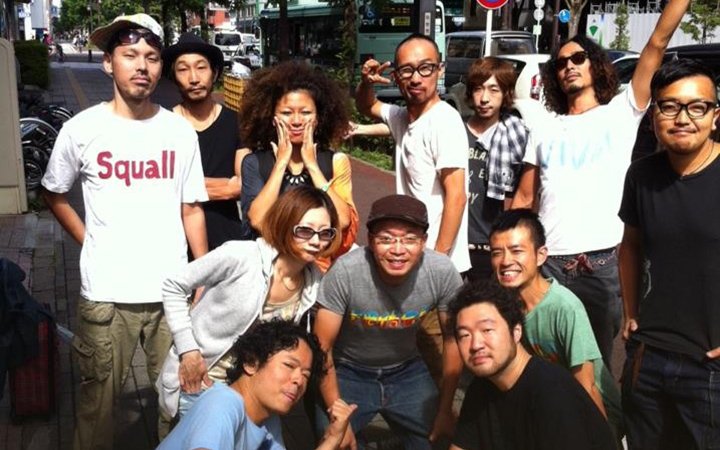
Kingdom Afrocks, Flying The Afrobeat Flag In Asia And Around The World
The history, influence and love for the Afrobeat music cannot be
overstated. The constitution and formation of the bands and artists
noted above are not surprising considering that they are a mix of
Nigerian born artists. Some of them are former musicians in either Fela
Kuti’s band or Femi Kuti’s band or people who witnessed and experienced
Fela’s music during his active touring days in Europe and America.
However, on a personal note nothing prepared me for the surprise and awe
I felt when I witnessed a Japanese based Afrobeat band known as Kingdom
Afrocks. It is a group of young Japanese musicians whose interpretation
of Afrobeat is as pure and unblemished as their charming
personalities.
A relatively young Afrobeat band of eight very talented members formed
in Tokyo in September 2006 may not be very well known around the world
yet, but I can say for sure that this band will go places from the magic
I experienced watching them jam in Omotesando here in Tokyo with the
legendary Tony Allen, a former Fela Kuti drummer for over a decade and
an accomplished Afrobeat musician. The band is amazing, staying true to
the basic style of classic Afrobeat a-la Fela Kuti with a subtle
influence and fusion of Brazilian, Latin American, and rock rhythms and
influences. I owe a debt of gratitude to a gentleman known as Mr. Paul
Tripcony a Briton whom I met at the African Festival in Yokohama and
have since become friends for alerting me to the existence of this
awesome band led by Mr. Leo Nanjo (bassist). In the next edition we will
be bringing you a full interview with this band and their take on ‘why
Afrobeat?’ and what their vision is with this musical style.
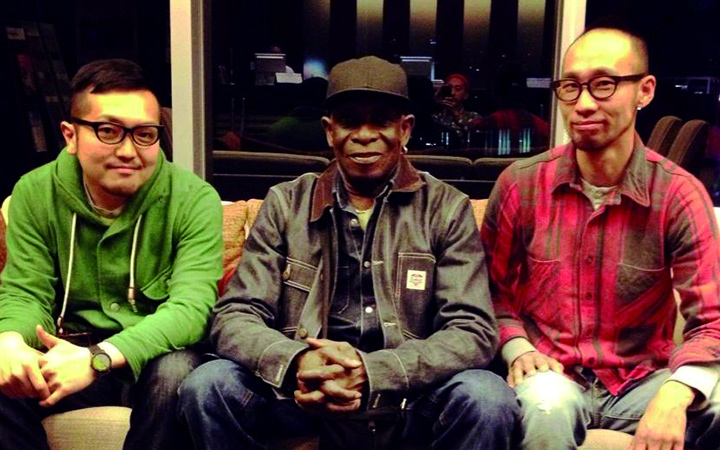
To say the truth I am pleasantly surprised that in Japan, there could emerge such a talented Afrobeat group such as Kingdom Afrocks. It is observed that though their style shows a strong influence of the big Taiko drums in the Japanese culture, they are actually more open to the huge rhythms, beats and fast pace of the Gbedu, Akuba, the talking drum and other drums ensemble that make up the Afrobeat style. I guess as the saying goes, “music speaks a very universal language”. Their shows are always sold out and the audience very responsive and interactive. It is amazing to me the depth of understanding of the Afrobeat music that these guys have and if you are a lover of Afrobeat as I am, you will soon get lost in the labyrinth of the Kingdom Afrocks’ magical rendition of ‘the-underground-spiritual-game”.
I tend to agree with the band’s website that “Co-recording and
performing live with the legendary drummer Tony Allen, who supported the
founding era of Afro beat with Fela Kuti, made Kingdom Afrocks the No.1
Afro beat band, both in name and reality.
The band has established their own style of music that incorporates
jazz, Brazilian, Latin and rock into Afrobeat.
They have performed at various outdoor music festivals in Japan,
including Fuji Rock Festival and Sunset Live, and at events such as
Tokyo Jazz Circuit and Gilles Peterson presents Worldwide Showcase.
In recent years, the band has frequently been contacted from overseas, which led them to perform at “Okayafrica”, hosted by QuestLove from The Roots and co-star with Giles Peterson and Francois. K, making Kingdom Afrocks one of the most featured world class bands in Japan.
The band’s performance at the Fuji Rock Festival 2012 after the release
of the album “SanSanNaNa” on 27 June 2012, and the national album
release tour has fascinated the crowd and further raised the band’s
profile.
No doubt, Kingdom Afrocks is one of the hottest bands to check out!